
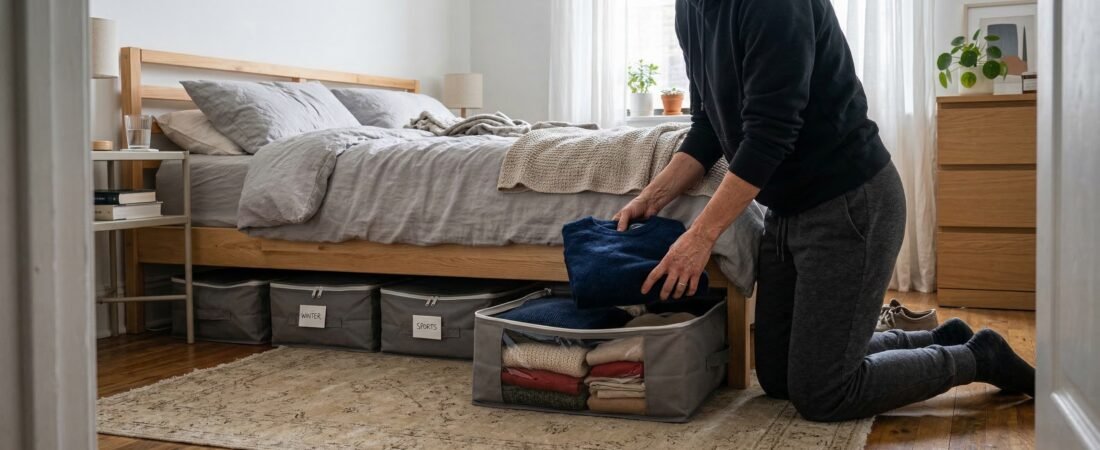
Under-bed storage can be a smart way to free up space in a small apartment.
But without a system, it often turns into a hidden mess — random boxes, mixed clothing, and items that are difficult to access.
The key is to treat under-bed storage like an extension of your closet, not a dumping space.
Here’s how to store clothes under the bed without creating clutter.
1. Decide What Actually Belongs Under the Bed
Not everything should go under your bed.
This space works best for clothing that you don’t need daily, such as:
- seasonal clothes
- spare bedding
- sweaters and winter items
- off-season shoes
Items used frequently should stay in your wardrobe or drawers.
Keeping under-bed storage for less frequently used clothes prevents constant digging through containers.



2. Use Soft Fabric Storage Bags for Clothing
Loose piles of clothing quickly become messy.
Fabric storage bags help keep everything contained while still fitting into tight spaces.
They are ideal for:
- sweaters
- t-shirts
- blankets
- seasonal clothing
Unlike rigid containers, fabric bags can slightly compress and adapt to low-clearance beds.
👉 See fabric under-bed storage bags:
Choose models with:
-
zipper closures
-
side handles
-
breathable fabric
3. Separate Clothes by Season
One of the easiest ways to create clutter is mixing clothing from different seasons.
Instead, group items by season before storing them.
For example:
Winter container
-
sweaters
-
scarves
-
thermal clothing
Summer container
-
lightweight shirts
-
shorts
-
swimwear
This makes it much easier to rotate clothing throughout the year.
4. Use Low-Profile Containers for Structure
Some beds have limited clearance, which makes standard storage boxes difficult to use.
Low-profile containers are designed specifically for under-bed spaces and help keep clothes protected and organized.
They work especially well for:
-
folded jeans
-
thicker sweaters
-
spare linens
👉 Explore low-profile under-bed storage containers:
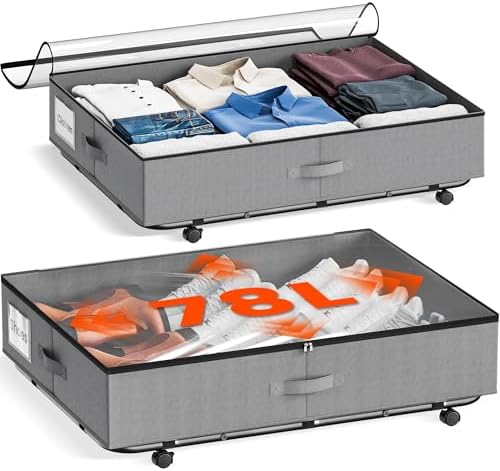
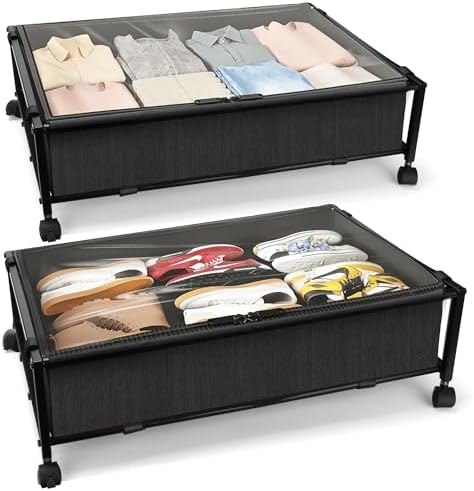
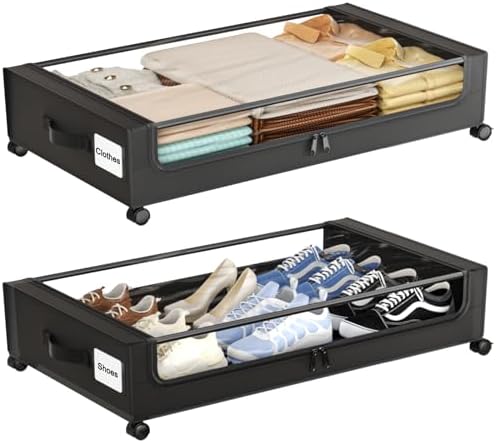
Containers with handles or wheels are easier to pull out when needed.
5. Label or Categorize Containers
One of the biggest frustrations with under-bed storage is forgetting what’s inside each container.
Simple labeling can save a lot of time later.
You can:
-
attach small tags
-
use clear containers
-
keep a consistent system for each side of the bed
For example:
Left side = winter clothing
Right side = spare bedding
6. Avoid Overfilling Containers
Overstuffed containers are difficult to slide under the bed and make clothes harder to retrieve.
Instead:
-
keep containers moderately filled
-
leave a little space inside
-
fold clothing neatly before storing
This keeps items accessible and prevents wrinkles.
Common Mistakes
Avoid these when using under-bed storage for clothes:
-
storing clothing without containers
-
mixing multiple clothing types in the same bag
-
overfilling storage bags
-
placing heavy items on top of soft containers
A little structure keeps under-bed storage manageable.
FAQs
Is it safe to store clothes under the bed?
Yes, as long as clothing is stored in sealed or protected containers that prevent dust.
What clothes should go under the bed?
Seasonal clothing, spare bedding, and items used less frequently work best.
Are plastic containers better than fabric bags?
Both work well. Fabric bags are more flexible, while plastic containers offer more structure.
Conclusion
Under-bed storage can add valuable space in small apartments — but only if it’s organized properly.
Using fabric storage bags, low-profile containers, and a simple seasonal system can prevent clutter from building up.
With a clear structure, the space under your bed becomes a practical extension of your wardrobe instead of a hidden mess.