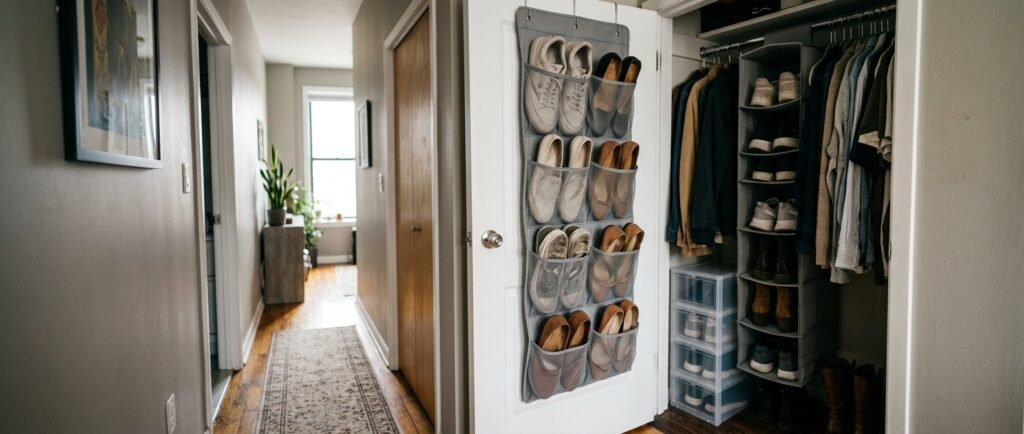
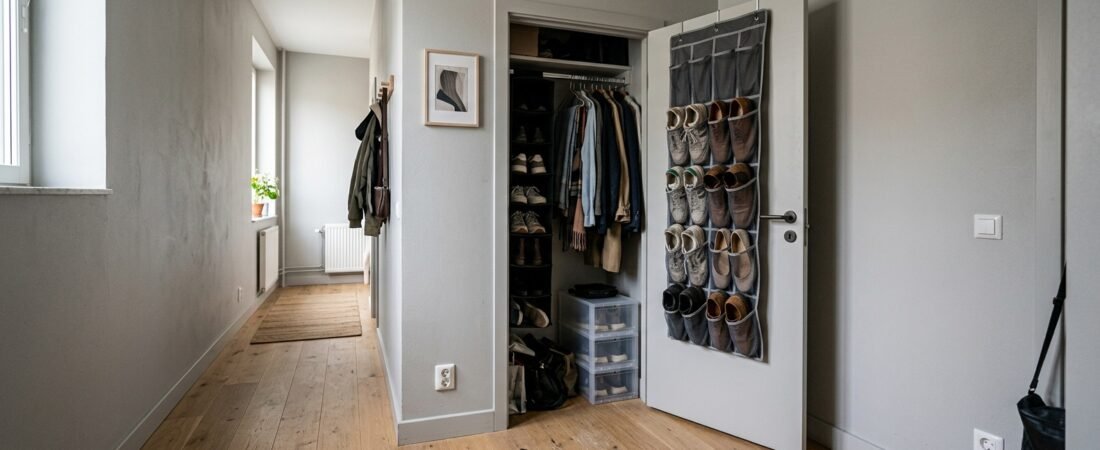
Shoes take more space than expected — especially in narrow apartment closets.
If your floor is crowded or your wardrobe feels tight, switching to a slim shoe organizer can free up space immediately.
This guide focuses only on space-efficient, slim designs that work in small closets
What Makes a Shoe Organizer “Slim”?
In small closets, depth matters.
Look for organizers that:
- Stay under 20–25cm deep
- Use vertical space
- Don’t block hanging clothes
- Keep visual weight low
Bulky racks defeat the purpose.
1. Slim Over-the-Door Shoe Organizer
Best for:
- Standard closet doors
- Renters
- Small bedrooms
Why it works:
It uses ignored space — the back of the door — without touching floor area.
Look for:
- 20–24 pockets
- Mesh or breathable front
- Reinforced hooks
👉 Recommended type:
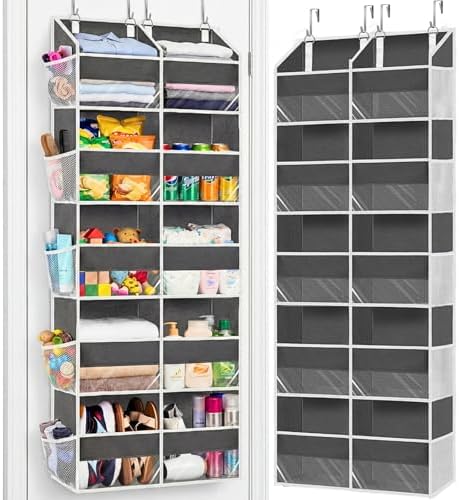


2. Narrow Hanging Shoe Organizer (Rail-Mounted)
Best for:
- Closets with one rail
- Shared wardrobes
- Studio apartments
This hangs from the clothing rod and stays compact enough not to interfere with hanging clothes.
Choose:
- Structured compartments
- Slim vertical design
- Moderate capacity (not oversized)
👉 Recommended type:
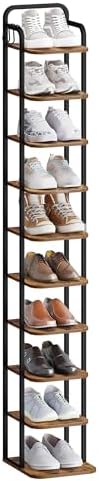

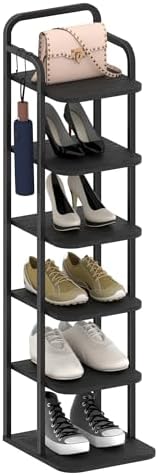
3. Stackable Slim Clear Shoe Boxes
Best for:
- Narrow closet floors
- Seasonal storage
- Minimalist setups
Clear slim boxes stack vertically and keep the layout clean.
Choose:
- Uniform dimensions
- Transparent front
- Ventilated design if possible
👉 Recommended type:


Which One Should You Choose?
- Have a closet door? → Over-the-door
- Limited rail space? → Hanging organizer
- Very narrow floor? → Slim stackable boxes
Keep it simple.
One system is usually enough.
Conclusion
In small closets, the problem isn’t the number of shoes.
It’s depth and placement.
Slim organizers keep the footprint low and the layout clean — without adding bulk.